Discover how jump rope builds confidence and a healthier relationship with food.
Most people who come to me in the gym spend hours worrying about their body shape instead of focusing on what their bodies can actually do, and that misplaced focus makes real fitness goals much harder to reach. You might eat the "right" foods and still carry extra weight or you might think you're overweight when you're perfectly healthy. This is where things get complicated, because our relationship with food has nothing to do with nutrition and everything to do with how we feel about ourselves. I've seen athletes who train hard yet obsess over every calorie and I've seen people who barely move but carry intense guilt about eating. Rope work changes that dynamic for me because it shifts the focus from appearance to performance. When you're busy coordinating your footwork and keeping rhythm, you stop thinking about whether your thighs look a certain way.
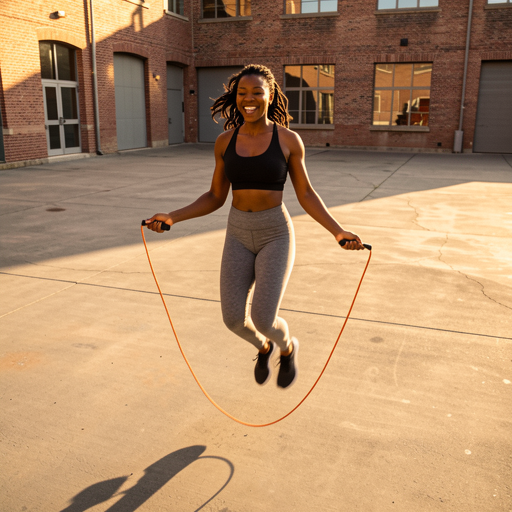
You start thinking about what your body can accomplish. The truth is that eating habits often develop as coping mechanisms during childhood and by the time we're adults, those patterns are deeply wired into how we handle stress, emotions and even success. Kids learn early that food can be a reward, a punishment or something to negotiate around. Some kids get teased about their weight and that teasing sticks with you far longer than you'd expect. When depression or anxiety shows up later in life, food becomes a familiar comfort, even though it never actually solves the underlying problem. I tell people this all the time: your body and your mind are connected and unhealthy eating patterns feed themselves if you let them, so stress management matters as much as meal planning.
👣
The rope gives you an alternative outlet, something physical and rhythmic that releases the same tension food usually tries to soothe. To skip effectively, you need to show up consistently and that consistency builds confidence that spills over into every other area of your life, including how you treat yourself at the dinner table. The fitness community has a tendency to glorify extreme diets and punishing workout schedules, but sustainable health looks completely different. It means eating a varied diet with whole foods most of the time, not all the time. It means understanding that occasional indulgence is not failure and it means recognizing that no amount of exercise will fix an eating disorder.
👩🏽🚀
If you or someone you know is struggling with compulsive behaviors around food, please talk to a professional. Eating disorders are treatable mental health conditions, not lifestyle choices or character flaws. You deserve support and reaching out is a sign of strength, not weakness. The same way I'd never tell someone to power through bad form on a heavy lift, I'd never tell someone to white-knuckle through an eating disorder alone. Building a healthy relationship with food takes time and the same patience applies to building a fitness routine that actually sticks.
👨
Find activities you genuinely enjoy rather than forcing yourself into routines that make you miserable. Jumping rope is one of the most effective full-body workouts you can do and it costs almost nothing to get started. But it's not a replacement for therapy or professional guidance if you're dealing with something serious. Start where you are, be honest about what's working and what isn't and surround yourself with people who encourage you to prioritize your overall well-being over chasing an unrealistic body standard. The best diet is the one that supports your energy, your mood and your long-term health and the best exercise routine is the one you'll actually keep doing.